
Geschäftskunden Portal
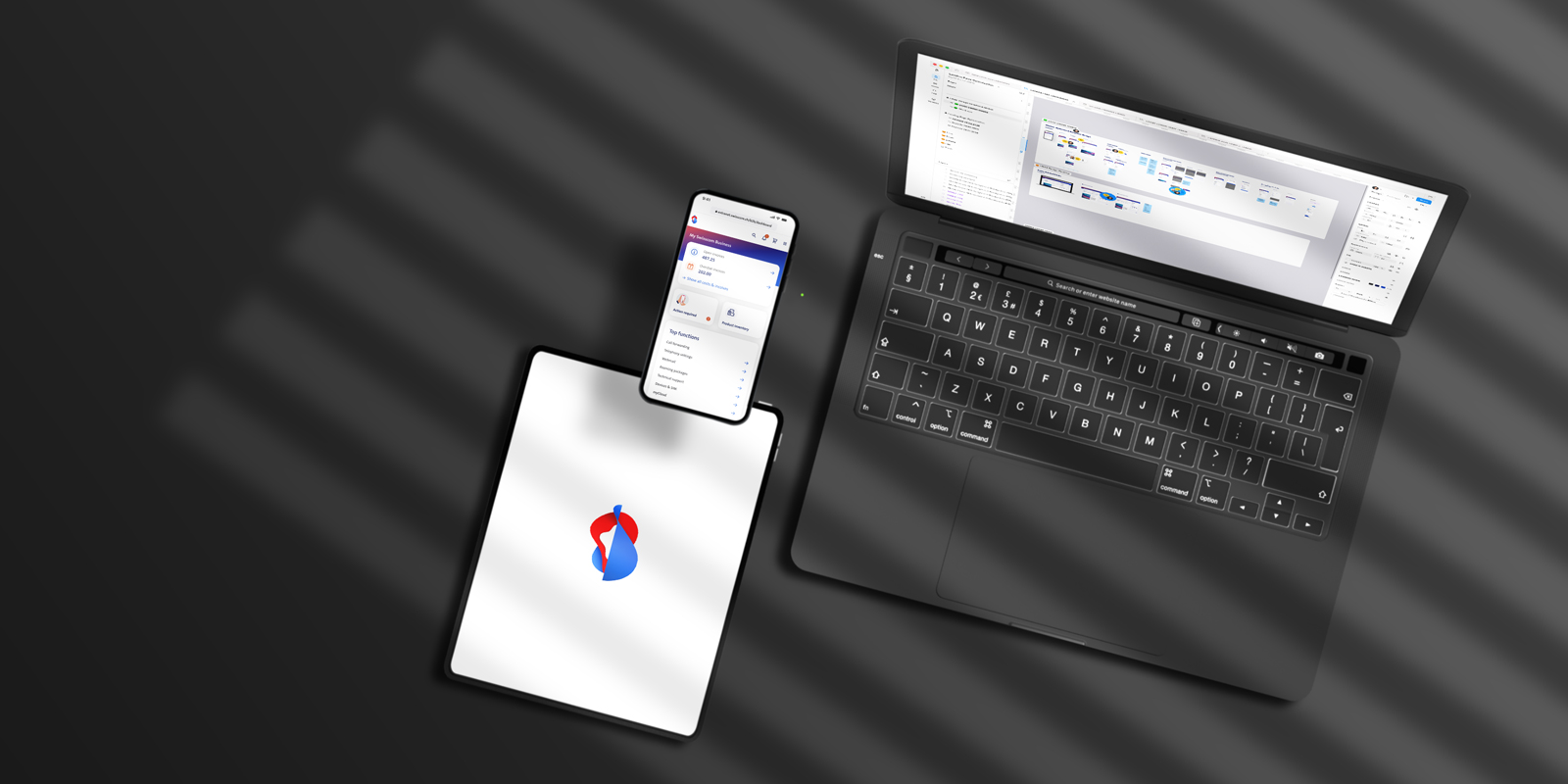
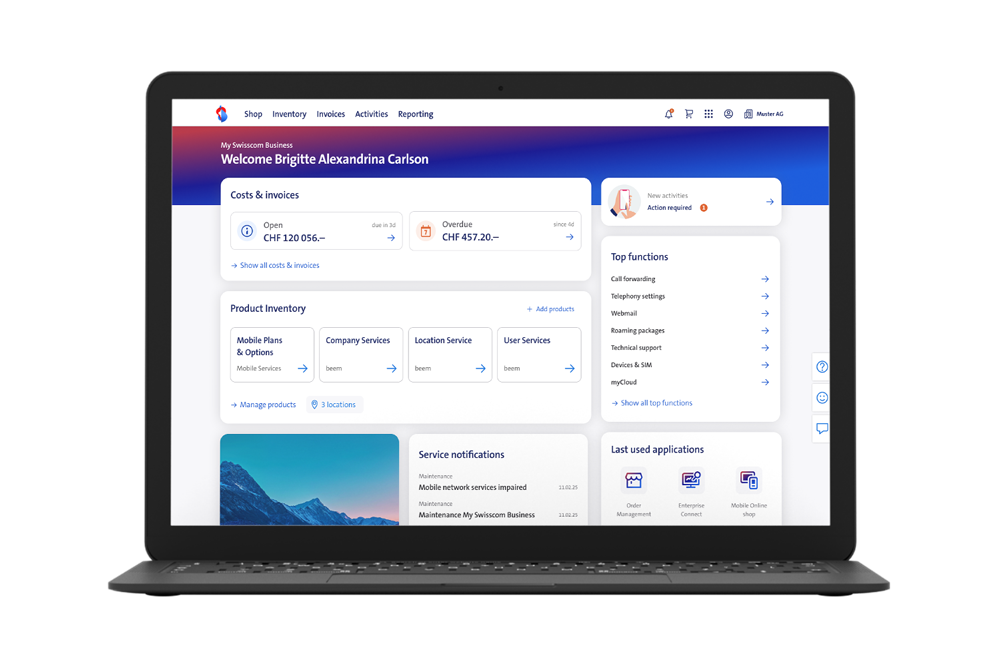
Swisscom's central self-service portal for business customers — used daily by thousands of companies across Switzerland. As Experience Design Lead, my role was to bring structure back into the system — simplifying the experience and making the portal easier to understand, navigate and scale.
Challenge
The portal had evolved over many years without a clear UX strategy.
The result was inconsistent interaction patterns, fragmented navigation and a steep learning curve — especially for new customers managing complex multi-service contracts.
Many tasks that should have been self-service still required support from Swisscom.
The business needed a portal that empowered users to solve problems independently — not one that required guidance at every step.
Design Approach
We began with a discovery phase, including workshops with internal stakeholders and sessions with real business customers.
The goal was to understand the most critical user problems and identify structural weaknesses in the experience.
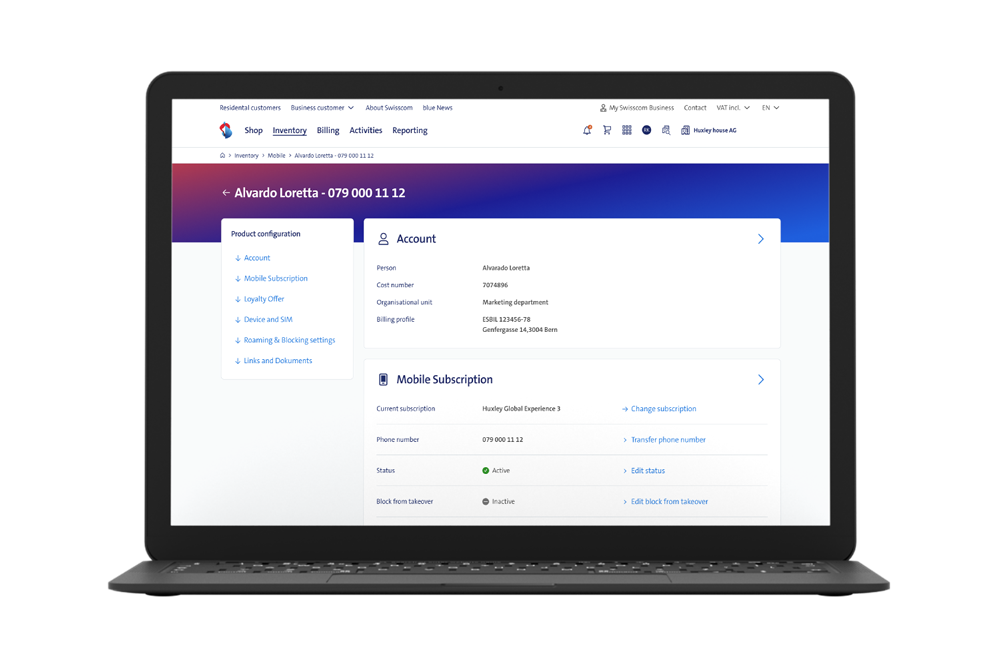
From there, I led a restructuring of the information architecture — aligning navigation and workflows with real user mental models and reducing cognitive load.
Through iterative prototyping cycles we validated usability improvements, continuously aligning design decisions with engineering and product teams to ensure feasibility.
My Contribution
- Defined and owned the UX strategy for the portal redesign
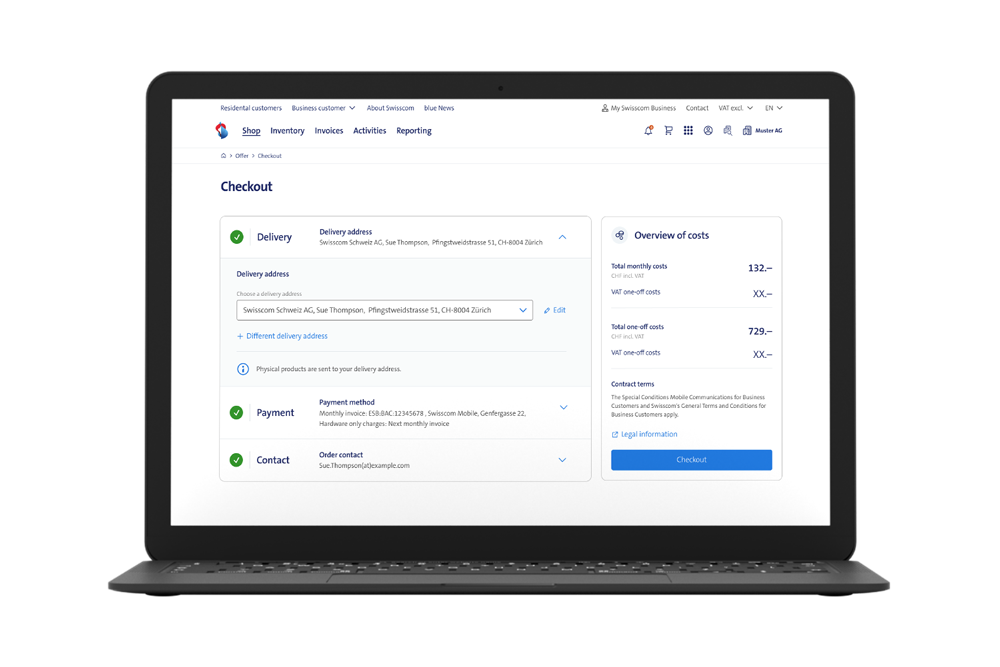
- Restructured the information architecture across core service areas
- Established shared design principles for the B2B product ecosystem
- Led and mentored a cross-functional design team
- Built strong alignment between design, product and engineering
- Developed a B2B-specific shared component library on top of the SDX design system
- Led quality control and design reviews across the product
- Conducted continuous usability testing with Swisscom business customers
Systems Thinking
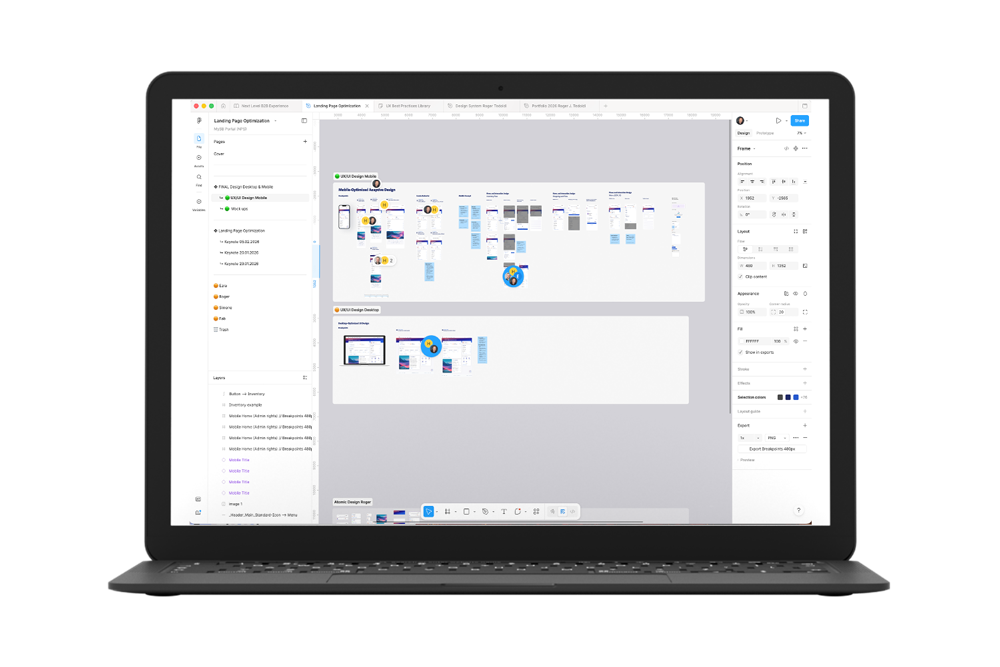
One of the biggest challenges was not the interface itself — but the absence of a shared design language across B2B teams.
Swisscom already had SDX as a central design system, but it was not tailored to the specific needs of business customers.
On top of SDX we developed a B2B Shared Library — a layer of components and interaction patterns designed specifically for our customer segments.
This allowed teams to move faster while staying aligned with the broader design system.
Consistency was no longer accidental — it became structural.
B2B UX isn't about beautiful screens or users saying “wow” to the interface. It's about users saying: “Wow — I just solved my problem, and I didn't even have to think about it.”